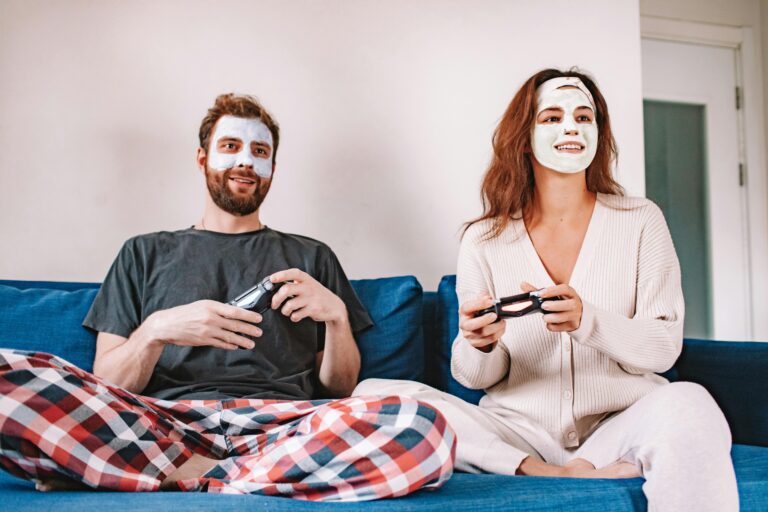
The same activity can be care on one day, pleasure on another, both at once, or neither. A bath, a purchase, a nap, a favorite meal, or an evening of television does not reveal its meaning by itself. Context matters, and pleasure does not need a health justification to be valid.
Quick answer
Self-care is an intentional action that supports health, functioning, safety, or a daily need. Indulgence generally centers immediate pleasure or comfort. Neither label is a moral verdict. The same choice can be care, pleasure, both, or neither, depending on your needs, access, costs, risks, obligations, consent, and immediate and later effects.
What self-care means, and where the definition stops
The World Health Organization defines self-care as the ability of individuals, families, and communities to promote and maintain health, prevent disease, and cope with illness, with or without support from a health or care worker. That is broader than occasional wellness activities. It includes people taking an active role in health choices and may involve habits, healthcare, medicines, devices, diagnostics, or support from others.
WHO also says self-care complements the health system. It does not replace healthcare or health workers. Some actions can be taken independently. Others need professional guidance, follow-up, or access to formal services.
For this guide, self-care means an intentional action taken to support health, functioning, safety, or a daily need. That could include taking medication as prescribed, making time to eat, arranging disability access, attending a healthcare appointment, asking for help, or choosing an enjoyable activity because pleasure or leisure is what you want.
This is not a clinical test. Definitions of self-care vary across health, nursing, psychology, and everyday use. A published concept analysis found multiple definitions across disciplines and described self-care through awareness, self-control, and self-reliance in support of health and well-being. It does not establish a medical category called self-indulgence or prove that specific lifestyle activities work for everyone.
What self-indulgence means, without turning it into a diagnosis
In everyday language, Merriam-Webster defines self-indulgence as excessive or unrestrained gratification of one’s appetites, desires, or whims. The word is value-laden. People may use it neutrally for a treat, critically for excess, or unfairly for rest and pleasure they think someone has not earned.
There is no single authoritative health definition that divides every activity into self-care or self-indulgence. In this guide, indulgence simply refers to a choice centered on immediate pleasure or comfort. That does not make it harmful, irresponsible, fake care, or morally inferior.
A pleasant choice can meet a real need. It can also have a cost. Both can be true. The useful work is noticing the situation, not assigning a character label to yourself.
Why the same activity can be care, pleasure, both, or neither
Activities do not arrive with fixed categories. Consider four people watching the same television show:
- One chose it for fun after meeting the obligations that mattered that evening.
- One is watching while waiting for pain medication to take effect.
- One is enjoying it and also noticing that an urgent deadline remains untouched.
- One did not choose it at all because another person controls the shared space.
The visible activity is the same. The needs, freedom, costs, risks, and effects are not.
Intention matters, but it is not the only factor. A person can intend to care for themselves and discover that the choice does not fit. A choice can help in one way and create difficulty in another. Limited money, time, privacy, mobility, food access, care coverage, transportation, or healthcare can narrow the available options. No reflection question should turn those limits into personal failure.
A nonjudgmental check before you decide
You do not need a binary verdict. Use the questions that fit your situation:
- What do I need right now? Consider food, hydration, medication you normally take, sleep opportunity, hygiene, safety, privacy, pain support, connection, quiet, fun, comfort, practical help, or healthcare.
- What am I hoping this choice will do? It might meet a need, offer pleasure, create distance from a demand, buy time, reduce immediate discomfort, or simply be enjoyable.
- What are the immediate and later effects for me? A choice can feel helpful now, later, both, or neither. Your answer may change across days.
- What will it cost? Check money, time, sleep opportunity, pain, privacy, energy, care duties, work, school, or another obligation.
- Is it safe, consensual, accessible, and compatible with care or treatment? A popular activity is not useful if it is unsafe, unwanted, inaccessible, or conflicts with guidance specific to you.
- Does an urgent need remain? Look for a health, safety, financial, legal, caregiving, school, or work issue that cannot reasonably wait.
- Would a smaller, different, or combined option fit better? You might keep the pleasurable choice and also take one practical step, or choose something easier to reverse.
When you are uncertain, a low-risk, reversible option gives you room to reassess. This is a reflection, not a scorecard.
The capacity-tomorrow question is one clue, not the test
You might ask, “How could this affect what I can do tomorrow?” That can surface a tradeoff involving time, money, pain, sleep opportunity, or obligations. It cannot diagnose the activity or predict how you will feel the next morning.
Use it alongside the other questions. Immediate effect, later effect, cost, risk, access, consent, responsibilities, and any unmet need may matter just as much. A choice can support one area while making another harder. It can also have no clear later effect at all.
A comparison table for mixed situations
| Choice | Could be care when | Could be pleasure or indulgence when | Check before deciding |
|---|---|---|---|
| Taking a nap | Sleep opportunity or physical rest is a need, and the setting is safe | You want the comfort of sleeping, with no need to give it another label | Safety duties, care coverage, timing, pain, sleep needs, and any advice specific to you |
| Watching a show or using a screen | It offers wanted company, interest, accessibility, or a lower-demand activity | You are watching because it is enjoyable | Time, sleep opportunity, sensory effects, shared-space consent, and any urgent task |
| Buying something | The item meets a practical, access, health, safety, or daily need | The main reason is enjoyment, celebration, collecting, or novelty | Budget, privacy, return options, pressure from others, and upcoming essentials |
| Eating a favorite food | It meets hunger, access, cultural, comfort, convenience, or care needs | You want the taste, tradition, celebration, or pleasure | Allergies, medical guidance specific to you, availability, consent, and whether you have enough food |
| Taking a bath or shower | It meets hygiene, pain-comfort, temperature, sensory, or privacy needs | You enjoy the warmth, scent, quiet, or ritual | Fall risk, skin needs, water access, caregiving duties, and whether it is comfortable |
| Canceling or changing a plan | Illness, safety, access, overload, care duties, or a changed need makes the plan unworkable | You prefer another activity or no activity | Commitments, notice, money, transportation, other people’s reliance, and whether a different arrangement works |
| Spending time alone | Privacy or lower social demand fits what you need | Solitude is simply what you enjoy | Safety, care responsibilities, access to support, and whether an urgent need is still waiting |
| Asking someone for help | The task, decision, access need, or care need is not manageable alone | Shared effort makes the experience easier or more enjoyable | Consent, privacy, the other person’s availability, cost, and whether qualified help is needed |
None of these rows declares the activity good or bad. They show why the answer can change with the person and the day.
Pleasure can be enough
Fun, comfort, celebration, leisure, taste, beauty, and play are valid parts of life. You do not have to rename every enjoyable choice as self-care to defend it. You also do not have to make pleasure productive.
An activity can be “something I wanted” and stop there. If it is safe, consensual, and workable within your circumstances, enjoyment is a complete reason. If it has mixed effects, you can acknowledge those without turning the choice or yourself into a problem.
This matters because moralizing ordinary pleasure can hide real needs. Food may be nourishment, culture, convenience, comfort, celebration, or several at once. A couch may be a place for pain support, care work, television, sleep, conversation, or nothing in particular. A purchase may be necessary, joyful, regretted, inaccessible to someone else, or all of those in different combinations.
Basic needs and healthcare are not optional wellness extras
Self-care is often presented as a list of optional activities. Basic and clinical needs belong in a different category of importance.
Food, hydration, medication as prescribed, sleep opportunity, hygiene, safety, disability access, healthcare, and asking for help may be self-care even when they are not pleasant, aesthetic, easy, or chosen freely. Access is uneven. If a person cannot meet a need because of money, housing, work, discrimination, disability barriers, caregiving, or unavailable services, the answer is not a stricter routine.
Professional care is part of the picture, not evidence that self-care failed. The National Institute of Mental Health notes that self-care looks different for everyone and may take trial and error. It also gives a separate professional-help boundary for severe or distressing symptoms that persist. If you are worried about symptoms, treatment, medication, pain, sleep, eating, substance use, or another health issue, speak with an appropriate healthcare professional rather than using this comparison to diagnose yourself.
For a separate guide to building an adaptable practice over time, see how to build a self-care routine.
When a choice repeatedly causes harm or leaves an urgent need untouched
Do not start by calling yourself lazy, avoidant, addicted, undisciplined, or self-sabotaging. Start with what is happening.
If a choice repeatedly causes harm, interferes with daily life, or feels difficult to control, consider discussing it with an appropriate healthcare or mental-health professional. That conversation can focus on the behavior, its context, and what support is available without forcing a moral label.
If an urgent health, safety, financial, legal, caregiving, school, or work issue is being delayed, address the urgent issue or seek practical help. The comforting activity does not become bad because another need is urgent. It may simply be unable to solve that need.
If the unresolved issue is guilt about stopping, read how to rest without guilt. If it involves saying no, changing a request, or communicating a limit, use the boundary-setting guide.
A short workplace boundary
Employee perks, catered food, gifts, and enjoyable events are not automatically indulgences. Personal wellness activities also cannot offset excessive workload, unsafe conditions, inadequate staffing, inaccessible breaks, low control, harassment, poor scheduling, or lack of leave.
The World Health Organization’s mental health at work guidance puts organizational action on working conditions alongside individual support. Employers should address structural conditions first and must not infer health, need, capacity, or benefit from activity participation or completion. For the broader organizational lane, use Fegud’s workplace mental-health strategy guide.
Frequently Asked Questions
What is the difference between self-care and self-indulgence?
Self-care is an intentional action that supports health, functioning, safety, or a daily need. Indulgence generally centers immediate pleasure or comfort. The difference is not a clinical verdict, and the categories can overlap. Context, access, consequences, consent, obligations, and the need you are trying to meet all matter.
Is self-indulgence always bad?
No. The word is often used critically, but pleasure, comfort, celebration, and leisure are valid. An enjoyable choice does not need to improve health or productivity to be worthwhile. Check for costs, risks, consent, and urgent needs without treating enjoyment as a moral failure.
Can something be both self-care and self-indulgent?
Yes. A favorite meal can meet hunger, offer cultural connection, and be pleasurable. A purchase can meet an access need and feel celebratory. A nap can provide wanted rest and comfort. Mixed reasons and mixed effects are normal.
What counts as self-care?
Self-care can include actions related to health, safety, functioning, daily needs, healthcare, and support from others. It may be basic, clinical, practical, social, or enjoyable. No universal activity list can account for each person’s health, culture, disability, access, finances, responsibilities, and preferences.
Is rest self-care or avoidance?
Rest can meet a real need, be pleasurable, buy time, or have several purposes. Do not diagnose it from the outside. Check what you need, whether anything urgent remains, what the immediate and later effects are for you, and whether practical help or a different arrangement is needed.
How do I know what kind of self-care I need?
Start with the need, not the activity. Check food, hydration, medication you normally take, sleep opportunity, hygiene, pain, safety, privacy, connection, quiet, fun, practical help, and healthcare. Then choose an option that is safe, consensual, accessible, and compatible with your circumstances. Reassess without grading yourself.
Does self-care have to be difficult to count?
No. Difficulty is not proof of value. Care can be easy, pleasant, boring, uncomfortable, or unavailable. The relevant question is whether the action fits a health, safety, functioning, or daily need in your context, not whether it required discipline.
Is watching television, scrolling, shopping, or eating comfort food self-indulgent?
Not inherently. Each can be care, pleasure, both, or neither. Consider the need, your freedom to choose, immediate and later effects, money, time, sleep opportunity, health guidance specific to you, consent, and any urgent obligation. Avoid assigning a category based only on the activity.
What if I cannot tell whether a choice is helping?
Choose a low-risk, reversible option when one is available. Notice the immediate effect and check again later. You can change the duration, combine pleasure with one practical step, ask for help, or choose something different. Uncertainty does not mean you chose incorrectly.
When should I talk with a professional?
Consider professional support if a choice repeatedly causes harm, interferes with daily life, feels difficult to control, or is connected to symptoms or distress that concern you. Seek urgent local help for an immediate safety or health issue. This guide cannot diagnose a behavior or replace person-specific care.
If you want one separate, low-pressure way to choose personal wellness activities, visit the individual self-care bingo page.