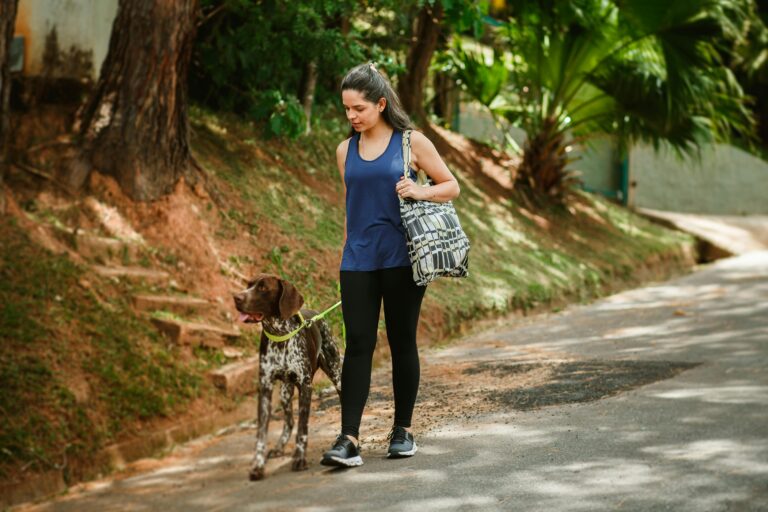
Walking for health. Walking can be a practical way to build aerobic activity into ordinary life. It is not a test of health, effort, independence, or character. Some people walk for exercise, some walk only when needed, some wheel, and some use other forms of movement.
Walking For Health: quick answer
Walking for health can serve different purposes without becoming a test of fitness or worth.
Walking may be a useful primary aerobic habit if it is safe, accessible, and active enough for your goal. It is not universally sufficient. Walking alone may not cover strength, balance, flexibility, sport, job, or rehabilitation needs, and wheeling or other activities may be a better fit.
Walking For Health: what walking can mean in this guide
Walking for health may be a primary aerobic habit for some people, but it is not universally sufficient.
Walking can be transportation, recreation, exercise, a mobility task, part of work, or a way to spend time with someone. It does not become exercise only when it reaches a particular pace, duration, route, or step count.
The World Health Organization defines physical activity broadly and includes walking, cycling, wheeling, sport, recreation, work, transportation, and domestic activity.[2] Exercise is the planned or structured part of physical activity. A planned walk may be exercise. A trip through a grocery store may be physical activity without being a workout.
This page owns one question: can walking be a person’s primary movement habit? For the broader category, including wheeling, household tasks, position changes, upper-body movement, seated activity, and rest, use Fegud’s inclusive guide to everyday movement.
Walking For Health: is walking enough exercise?
Walking for health guidance should remain weekly and flexible rather than becoming one daily prescription.
Sometimes, for one part of the picture.
Brisk walking is an example of moderate-intensity aerobic activity in current CDC adult guidance.[3] Whether a particular walk reaches that intensity depends on the person and the effort involved. A pace that feels moderate to one person may feel light, vigorous, painful, unstable, or impossible to another.
Walking may be enough to serve as a primary aerobic activity when it is safe, available, and appropriately challenging for that person’s current ability and purpose. It does not automatically provide every type of activity named in public-health guidance. CDC guidance pairs aerobic activity with muscle-strengthening activity on at least two days each week.[3] Canada’s adult guidance also calls for varied activity and adds balance-challenging activity for adults aged 65 and older.[5][6]
Walking can still be worthwhile when it does not meet a guideline or fitness goal. It may support transportation, independence, enjoyment, care work, or time with another person. Those purposes do not need to be upgraded into a health claim.
Walking For Health: adult guidelines are weekly population guidance, not a walking prescription
Walking for health should be chosen by safety, access, effort, and purpose rather than appearance.
WHO’s guidelines provide public-health recommendations for adults, older adults, and people living with chronic conditions or disability.[1] CDC’s current adult summary recommends 150 minutes of moderate-intensity activity per week, 75 minutes of vigorous-intensity activity, or an equivalent combination, plus muscle-strengthening activity on at least two days.[3]
Those figures are not a required daily walk. They do not create a universal 30-minute session, pace, distance, step target, route, or schedule. They also do not mean that every minute spent on foot reaches moderate intensity.
Walking can contribute to the aerobic part when the effort is moderate or vigorous for the person doing it. Other activities can contribute too. Wheeling, cycling, swimming, upper-body aerobic activity, adapted sport, dance, and other options may be more accessible or useful. WHO explicitly includes wheeling among popular ways to be active.[2]
Step-count studies are often observational. They can describe associations in the groups studied, but they do not establish one target that every reader should pursue. A device may also miss wheeling, mobility-aid use, cycling, swimming, upper-body activity, or work that does not resemble a step. No step target is proposed here.
Walking For Health: a decision table for choosing walking or another route
Walking for health can include mobility aids and support, while wheeling or another activity may fit better.
Use this table to choose a direction, not to score yourself. More than one row may apply. Rest can be the right decision.
| Your situation | Walking may fit when | Another route may fit better when | A cautious next step |
|---|---|---|---|
| You want a primary aerobic habit | Walking is available, wanted, and brings an appropriate level of effort without concerning symptoms | Walking stays too light for the goal, is not enjoyable, or another aerobic activity is easier to sustain | Compare options by safety, access, effort, and purpose, not by which one looks more athletic |
| Pain or a chronic condition affects movement | Your individual guidance allows walking and symptoms stay within the boundary you have been given | Walking starts new pain, worsens symptoms, or conflicts with a treatment or recovery plan | Ask a qualified clinician, physical therapist, occupational therapist, or exercise professional when the safe amount or type is unclear |
| Balance, falls, dizziness, or faintness are concerns | The route and support are appropriate and you have a reliable way to stop safely | Uneven surfaces, traffic, stairs, weather, or symptoms make a fall more likely | Consider a supported, seated, indoor, wheeling, water-based, or supervised option |
| Fatigue or limited energy shapes the day | The walk leaves room for necessary work, care, treatment, and recovery | It replaces needed rest or causes an unhelpful symptom increase | Shorten, switch, get help, or rest. A general article cannot set an energy limit for you |
| Walking is not accessible | A mobility aid, companion, accessible route, transport link, or indoor space makes it workable by choice | Curbs, surfaces, distance, washroom access, lighting, traffic, cost, or personal safety remain barriers | Choose wheeling or another non-walking activity and use the everyday-movement guide for options |
| Weather or air conditions are unsafe | Current conditions and your health needs allow the route | Heat, cold, ice, smoke, poor air quality, storms, or low visibility create risk | Move indoors, change the activity, postpone it, or rest. Do not treat an outdoor walk as mandatory |
| Caregiving, shift work, or limited time affects access | Walking can be part of a trip or break that genuinely exists | The idea requires care coverage, a break you do not have, unsafe travel, or lost sleep | Use another time or activity only if it fits. The barrier may need practical or workplace support |
| You are comparing walking with running | Walking matches your preference, access, current capacity, and goal | Running or another activity better matches a specific training goal and is appropriate for you | Do not choose from a claim that one activity is universally healthier, safer, or more effective |
CDC notes that adults with disabilities need activity options consistent with their abilities and that clinicians can help match the type and amount of activity.[4] The same page recognizes barriers in the built and natural environment. Access is not a motivation problem.
Walking For Health: walking with disability, pain, balance concerns, or fatigue
Walking for health depends on route design, weather, traffic, lighting, personal safety, and accessible facilities.
Disability does not tell us whether a person can, should, or wants to walk. A wheelchair user may walk sometimes, never, or for specific tasks. A person who walks may still need a mobility aid, a seat, assistance, shorter distances, or a route with fewer demands.
Possible adaptations include:
- using the mobility aid that supports safety and independence
- choosing a shorter or indoor route
- walking with support when wanted and available
- placing rest points into the route
- switching to wheeling, seated aerobic activity, water-based activity, cycling, or another form of movement
- replacing the activity with rest when symptoms, fatigue, treatment, or recovery require it
These are options, not instructions. Pain, joint instability, pressure care, falls, autonomic symptoms, heart or lung conditions, recent surgery, medication, pregnancy, and rehabilitation plans can change what is appropriate. CDC advises people with disabilities to use activity consistent with their abilities and seek individualized guidance when needed.[4]
Walking For Health: walking in an unsafe or inaccessible environment
Walking for health and running meet different needs, so there is no universal winner.
A route is not accessible because it exists on a map. Sidewalk condition, curb cuts, crossing time, benches, washrooms, lighting, traffic, animals, harassment, cost, transit, weather, and the reliability of a mobility aid can all change the decision.
CDC describes activity-friendly routes as safe and convenient networks for walking, rolling, or cycling. Its community-design guidance includes sidewalks, crossings, lighting, benches, public washrooms, shade, transit, and access to everyday destinations.[7] That puts part of the responsibility on community design, not on an individual finding more willpower.
If the neighborhood does not feel safe, do not recommend that someone simply go earlier, later, farther, or alone. An indoor public space, accessible recreation setting, home option, wheeling route, transport-assisted trip, or no added activity may be more realistic. Limited access is a real constraint.
Walking For Health: walking versus running: no universal winner
Walking for health does not require a special pace, route, terrain, shoe, device, or time of day.
Walking and running are both forms of aerobic physical activity when they create the relevant effort. They differ in intensity, skill, time, impact, training effect, accessibility, and personal preference. Those differences do not produce one winner for every body or goal.
Running may reach vigorous intensity for some people. Walking may reach moderate or vigorous intensity for some and stay light for others. A person training for a race, a physically demanding job, a sport, or a specific fitness outcome may need work that walking does not provide. Another person may use walking as their main aerobic activity because it fits their health, access, enjoyment, and schedule.
This guide does not claim that walking matches running when time, distance, or energy expenditure is held constant. It also does not claim that walking has a near-zero injury rate or that running is inherently harmful. Individual health, training history, progression, surfaces, falls, pain, and exposure all matter.
Walking For Health: you do not need to optimize every walk
Walking for health should stop when the route, conditions, symptoms, or care guidance make it unsafe.
A walk does not need a special time, terrain, pace, shoe, nature setting, hill, interval, post-meal window, or tracking device to be valid. Those details may matter for a specific person, goal, condition, route, or comfort need, but this article does not set a universal version.
If you want to make walking a repeatable habit, keep the planning practical:
- Name the purpose. Aerobic activity, transportation, time outside, an errand, or company can lead to different choices.
- Check access and safety. Consider symptoms, weather, route, lighting, traffic, mobility support, time, and the ability to stop.
- Choose a workable amount. There is no daily quota here. Follow individual clinical or rehabilitation guidance when it applies.
- Keep another route available. Wheeling, cycling, seated activity, water-based activity, home movement, and rest prevent walking from becoming the definition of participation.
- Review the effect. New pain, worsening symptoms, falls, faintness, or an activity that disrupts recovery is a reason to stop and reassess, not to prove commitment.
Walking For Health: when not to walk, and when to get help
Walking for health at work must remain optional and supported by usable breaks, staffing, access, and privacy.
Do not start or continue a walk when the route or conditions are unsafe, when you cannot use needed support, or when walking conflicts with individual medical, surgical, rehabilitation, pregnancy, pressure-care, or fall-prevention guidance.
Stop and get to a safe position if you develop chest discomfort, severe or unusual breathing trouble, faintness, dizziness that threatens balance, new or worsening pain, weakness, confusion, a fall, or another concerning symptom. Seek timely clinical advice for new, persistent, severe, or worsening symptoms.
Call local emergency services for tight or squeezing chest pain, severe difficulty breathing, fainting with poor recovery, unresponsiveness, or another sign of an immediate emergency. NHS guidance treats tight or squeezing chest pain, severe difficulty breathing, and a person who has passed out and is not responding normally as emergency signs.[8][9] Fainting during exercise also needs emergency assessment.[10]
Heat and cold change the decision. CDC advises stopping activity and moving to a cool place if you feel faint or weak in the heat.[11] In cold conditions, shivering, exhaustion, confusion, fumbling hands, slurred speech, or drowsiness can be signs of hypothermia and require shelter and medical attention.[12] There is no universal temperature cutoff in this guide. Weather alerts, clothing, duration, medication, health conditions, available shelter, and local advice matter.
This is general education, not diagnosis, rehabilitation, or an exercise prescription. Ask an appropriate healthcare professional for individualized advice when a health condition, disability, pregnancy, medication, pain, balance concern, recent injury, surgery, or symptom makes the safe choice unclear.
Walking For Health: workplace walking needs access and job design
Walking for health should stay flexible, safe, and appropriate to the individual context.
An employer can offer walking as one optional activity. It should not become the workplace definition of movement or wellbeing.
Good design starts with usable breaks, reasonable workload, adequate staffing, safe routes, accessible entrances and washrooms, weather options, mobility-aid access, and a real choice of walking, wheeling, non-walking activity, or non-participation. A walking meeting is not accessible by default. A lunch walk is not available when someone must work through lunch, provide care, manage symptoms, or use the break for rest.
Employers should not collect individual steps, routes, speed, health data, disability information, or symptom data for a wellness activity. They should not rank people, run step competitions, infer health or effort from participation, or ask someone to explain why they chose an alternative. Workplace wellness cannot repair unsafe job design or inaccessible space. Broader employer responsibilities belong in Fegud’s workplace mental-health strategy guide.
Walking For Health: frequently Asked Questions
Walking for health should stay flexible, safe, and appropriate to the individual context.
Walking for health does not require a daily step target.
Walking for health can be replaced by wheeling, seated activity, cycling, water-based activity, or rest.
Walking for health should not replace strength, balance, rehabilitation, or condition-specific care when those are needed.
Walking for health can be practical without being mandatory.
Is walking enough exercise on its own?
It can be a primary aerobic activity for some people, but it is not universally sufficient. Walking alone may not meet strength, balance, flexibility, sport, job, or rehabilitation needs. The answer depends on effort, current ability, goals, safety, access, and any individual guidance.
Does walking count toward adult physical activity guidelines?
It can. Brisk walking is a CDC example of moderate-intensity aerobic activity.[3] A particular walk counts toward that component only when its effort fits the relevant intensity for the person. The guidelines also include muscle strengthening, and older-adult guidance may include balance activity.[3][6]
How much should I walk each day?
This guide does not set a daily amount. Current adult recommendations are framed as weekly population guidance, not a mandatory daily walk.[1][3] A safe amount may differ with ability, goals, symptoms, health, work, care duties, recovery, and clinical advice.
Do I need a daily step target?
No universal step target is needed. Observational step studies do not create a personal prescription. Step counts can also miss wheeling and many non-walking activities. Use a tracker only if it is useful to you and does not conflict with care, access, privacy, or wellbeing.
Is walking better than running for health?
There is no universal winner. Walking and running differ in intensity, time, impact, training effect, access, and preference. Choose based on your goal, current capacity, safety, enjoyment, and qualified advice when needed, not a claim that one activity is always superior.
What can I do if walking is painful or unsafe?
Stop if pain is new, concerning, or worsening. A shorter, supported, seated, wheeling, water-based, cycling, or other option may fit better, and rest may be appropriate. Seek individual advice when pain, balance, falls, disability, a chronic condition, injury, surgery, or rehabilitation changes the decision.
What counts if I use a wheelchair or mobility aid?
Wheeling, transfers, upper-body activity, adapted sport, household movement, and other activities may contribute to physical activity. Mobility-aid use does not reveal a person’s fitness or activity level. Use the option that supports safety, access, independence, and any individual care guidance.
What if I cannot walk outside because of weather or neighborhood safety?
Do not treat the outdoor walk as mandatory. An indoor route, home activity, accessible recreation setting, wheeling, another movement option, or rest may fit. Unsafe streets, poor air, heat, cold, ice, lighting, traffic, and harassment are real barriers, not failures of motivation.
When should I stop a walk and seek care?
Stop for chest discomfort, severe or unusual breathing trouble, faintness, balance-threatening dizziness, new or worsening pain, weakness, confusion, a fall, or another concerning symptom. Use local emergency services for tight or squeezing chest pain, severe breathing difficulty, poor recovery after fainting, unresponsiveness, or another emergency sign.[8][9][10]
Can a workplace run a step challenge to encourage walking?
A step competition can exclude non-walking activity and create pressure or health inferences. Employers should offer voluntary, accessible choices without individual step, route, health, symptom, or disability tracking, ranking, or required disclosure. Job design, break access, workload, safe routes, and accessibility come first.
Sources
[1] https://www.who.int/publications/i/item/9789240015128 [2] https://www.who.int/news-room/fact-sheets/detail/physical-activity [3] https://www.cdc.gov/physical-activity-basics/guidelines/adults.html [4] https://www.cdc.gov/disability-and-health/conditions/physical-activity.html [5] https://csepguidelines.ca/guidelines/adults-18-64 [6] https://csepguidelines.ca/guidelines/adults-65 [7] https://www.cdc.gov/physical-activity/php/strategies/increasing-physical-activity-through-community-design-prevention-strategies.html [8] https://www.nhs.uk/conditions/heart-attack [9] https://www.nhs.uk/symptoms/shortness-of-breath [10] https://www.nhs.uk/symptoms/fainting [11] https://www.cdc.gov/heat-health/risk-factors/heat-and-athletes.html [12] https://www.cdc.gov/winter-weather/prevention/index.html