Start smaller than you think. Self-care for beginners does not need a morning routine, a shopping list, or an hour you do not have. Choose one activity that feels useful and possible today. That is a complete start.

Self-care for beginners starts with one need and one small response, not a complete routine.
Self-Care for Beginners: how to start
The simplest approach to self-care for beginners is to notice one ordinary need. Maybe you want food, water, comfortable movement, quiet, company, or a few minutes away from a task. Choose one safe activity that fits your time, body, surroundings, and budget. Try it once. Keep it, change it, or drop it based on how well it fits.
That is the basic shape of self-care: notice, choose, try, and adjust. You do not need to turn the first choice into a daily rule. If you want a seasonal menu, try fall activities that stay optional.
Good self-care for beginners stays practical and does not pretend an activity can replace needed medical, mental health, or social support.
What is self-care, and what does it not need to be?
Self-care is the ordinary care you take part in for yourself. It can include practical needs, health care you already use, rest, enjoyable activities, food, movement, connection, and asking for help.
The World Health Organization describes self-care as something people may do with or without support from a health or care worker. It also says self-care complements formal care. A walk, snack, phone call, or bingo square is not a treatment plan and does not replace professional support when you need it.
Self-care does not have to be:
- expensive or photogenic;
- done every day;
- completed alone;
- calming in the same way for everyone;
- another way to grade your discipline;
- a fix for pain, illness, unsafe conditions, money pressure, or an overloaded schedule.
Sometimes self-care is enjoyable. Sometimes it is practical. Sometimes it is deciding that an optional activity is too much today.
Use Movement, Nutrition, Connection, and Mindset to organize self-care for beginners without turning the four areas into requirements.
Which area should you start with?
Fegud organizes activities across Movement, Nutrition, Connection, and Mindset. Use the four areas as a menu, not a checklist.
| Area | A question to ask | One possible start |
|---|---|---|
| Movement | Would changing position or moving comfortably feel welcome? | Roll your shoulders, walk, wheel, stretch, or rest in a different position. |
| Nutrition | Would food or a suitable drink make the next hour easier? | Refill a drink or assemble a simple snack. |
| Connection | Would contact with a safe person feel good right now? | Send one line with no reply deadline. |
| Mindset | Would less input or a pleasant focus help? | Read one page, listen to one song, or sit quietly. |
Choose the row with the least friction. If none fits, skip the list and attend to the need that is already clear.
The best self-care for beginners uses activities that are available, acceptable, and easy to adjust.
What are simple self-care activities for beginners?
Here are twelve low-setup choices. No single activity is required.
Movement
- Change to a more comfortable position.
- Move one part of your body within a comfortable range.
- Step, walk, or wheel through a route that feels safe and available.
Nutrition
- Refill a suitable drink.
- Eat a snack you already have and enjoy.
- Put something easy within reach for later.
Connection
- Send a photo, emoji, or short hello to someone you like.
- Sit with a person or pet without needing to talk.
- Ask for one practical bit of help.
Mindset
- Listen to one familiar song.
- Read one page for pleasure.
- Notice three neutral details in the room, such as color, shape, or sound.
Need a shorter option right now? Browse these five-minute self-care activities. They include ways to adjust or skip activities based on access, energy, and safety.
A one-week experiment keeps self-care for beginners small enough to test without making a long commitment.
How do you pick three activities without building a routine?
Choose three experiments for one week. Use this filter:
- Available: Can I do it with what I already have?
- Acceptable: Do I actually want to try it?
- Adjustable: Can I shorten, change, or stop it easily?
For example, you might choose one song on Tuesday, a snack without multitasking on Thursday, and a low-pressure message on Saturday. The days can move. You can do all three at once, repeat one, or finish the week after a single activity.
Flexible self-care for beginners includes stopping, switching, shrinking, or skipping an activity.
Accessible self-care for beginners makes adaptation ordinary and does not ask anyone to explain why a choice does not fit.
Low-cost self-care for beginners starts with available food, objects, spaces, support, and activities before suggesting a purchase.
What should you do when an activity does not fit?
Stop, switch, shrink, or skip it. Disliking a popular self-care idea does not mean you are doing self-care badly.
A walk can become sitting near a window. Journaling can become one voice note, a doodle, or nothing. A phone call can become a text. Quiet can become familiar music. Movement can be seated, assisted, imagined, or left out when it is painful or unsafe.
Check the source of the friction. The problem may be cost, privacy, setup, sensory load, pain, timing, safety, or simply preference. Change the activity instead of trying to change your personality.
A first week of self-care for beginners can include one choice, a repeat, or no fixed schedule at all.
What could a gentle first week look like?
Keep the plan deliberately small:
- First choice: Pick one activity you can do with no purchase and little setup.
- Second choice: Try something from a different focus area only if you want another option.
- Third choice: Repeat the better fit or test one last activity.
- End-of-week check: Ask which choice felt available, acceptable, and adjustable.
If one activity fits well enough that you want more structure, you can build a self-care routine when you are ready. Routine building is a later decision. Your first week only needs to show you what belongs on your personal menu and what does not.
These questions keep self-care for beginners grounded in access, safety, preference, and real-life limits.
Use self-care for beginners as a menu of possibilities rather than a scorecard.
The right pace for self-care for beginners is the pace you can choose without pressure.
Frequently Asked Questions
What is basic self-care?
Basic self-care is the care you take part in for yourself, sometimes with support. It can include food, rest, hygiene, comfortable movement, connection, practical tasks, health care, and enjoyable activities. What is basic for one person may be difficult or unavailable for another.
Where should a beginner start with self-care?
Start with one immediate need and one small activity. Choose something safe, available, and easy to stop. You do not need to buy anything or create a daily plan.
What are simple self-care activities for beginners?
Try refilling a drink, eating an available snack, changing position, listening to one song, reading one page, or sending a short message. Pick the option that fits your actual circumstances today.
Does self-care have to become a daily routine?
No. Self care for beginners can stay occasional. A useful choice does not become less useful because you do not repeat it every day.
What if a popular self-care idea does not work for me?
Drop it or adapt it. Activities should fit your preferences, body, access, culture, safety, time, and budget. Popularity does not make an activity right for you.
How can I start self-care without spending money?
Use what is already available: change position, rest, drink something suitable, listen to familiar music, read a library book, contact someone, or spend a few minutes with an activity you already enjoy.
Can a bingo card help me choose what to try?
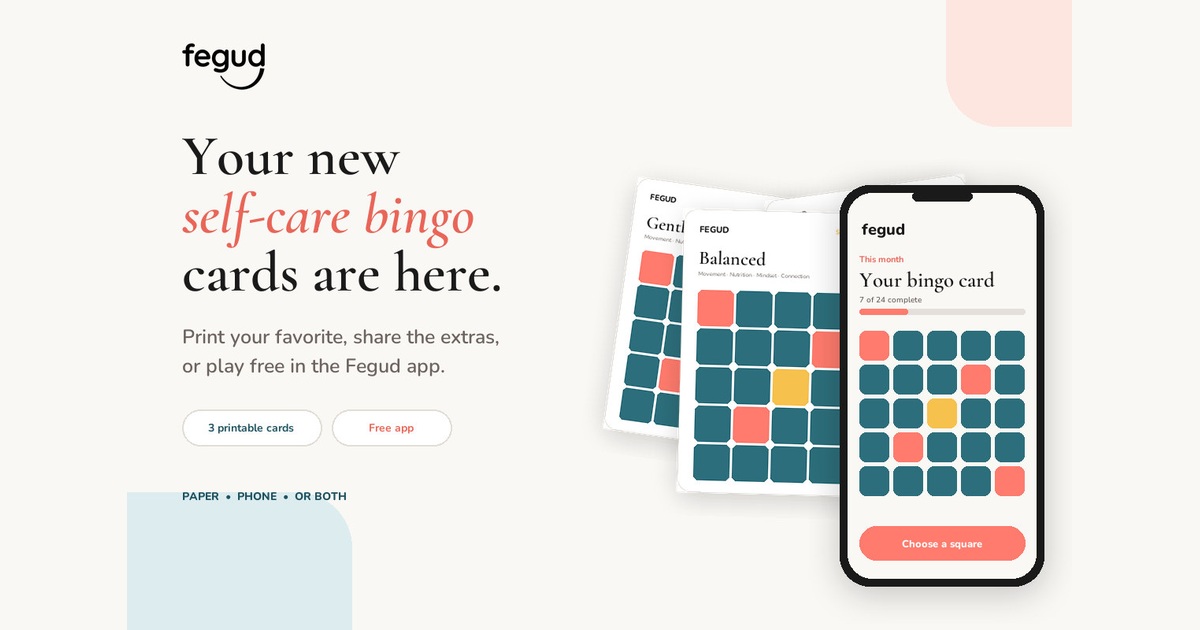
Yes. A bingo card can act as a visible menu when you do not want to build a list yourself. You can pick any square, change the activity when needed, and stop without completing a row.
Self care for beginners starts with one honest choice: what feels possible today?