A reset day does not need 28 tasks. Pick one useful activity, give it a little room, and stop when you have had enough. Your day can include rest, food, movement, company, quiet, or none of those in a prescribed order.

A self-care reset day can be one hour, half a day, or a full day. Its size matters less than your permission to choose and stop.
Self-Care Reset Day: a four-choice quick answer
A self-care reset day is a short, optional pause from your usual pace. Choose no more than one activity from each of four areas:
- Movement: Change position, stretch comfortably, walk, wheel, or put on one song and move if you want to.
- Nutrition: Have a suitable drink, eat something available, or make one familiar meal.
- Connection: Send a no-pressure message, sit with someone, or choose solitude.
- Mindset: Read, listen to music, play, write a few lines, or leave a little time unfilled.
You do not have to complete all four. One choice can be the whole reset.
Long reset-day lists are common. One current checklist contains 28 cleaning, planning, shopping, personal-care, and preparation tasks (Laura Conteuse, updated 2025). Another offers 50 ideas but tells readers not to complete all of them (Authentically Del, 2022). The useful part is the permission to choose. This plan starts there instead of making you sort through dozens of jobs first.
Define your self-care reset day by what you need, not by how many household jobs you can finish.
Decide what the day is not for
Before choosing an activity, make a tiny not-today list. It can include anything that would turn your pause into unpaid overtime for your life.
Maybe today is not for:
- deep cleaning every room;
- organizing every photo, inbox, drawer, and account;
- buying products for a new routine;
- fixing your sleep schedule;
- preparing every meal for the week;
- making a budget, vision board, or five-year plan;
- catching up on all the tasks you postponed;
- proving that you used your free time well.
You can still clean one surface or prepare one meal if that genuinely feels useful. The difference is choice. A reset is not a moral obligation to become tidier, healthier, calmer, or more productive by nightfall.
If stopping brings up a loud list of unfinished work, Fegud’s guide to rest without guilt offers a practical way to separate urgent obligations from work that can wait.
For a one-hour self-care reset day, one useful activity is a full plan.
One-hour reset: choose one useful activity
An hour is enough. You do not need to squeeze a full-day plan into it.
Try this loose shape:
- First 10 minutes: Meet one immediate need. Use the washroom, change clothes, get a suitable drink, eat something available, or sit somewhere comfortable.
- Next 40 minutes: Choose one activity with no improvement goal. Read, watch something familiar, play a game, make an easy meal, take a comfortable walk or wheel, call someone, listen to an album, or rest.
- Final 10 minutes: Decide what happens next. Continue, switch activities, return to your day, or do nothing in particular.
These times are suggestions, not checkpoints. You can spend the full hour on lunch or stop after the first 10 minutes. The one-hour version works because it limits the size of the plan, not because every minute has a job.
A half-day self-care reset day can use Movement, Nutrition, Connection, and Mindset as four optional routes.
Half-day reset: Movement, Nutrition, Connection, and Mindset
For a half-day, use four choices as a menu. Put them in any order and remove any that do not fit.
| Area | Full choice | Smallest version |
|---|---|---|
| Movement | Take a comfortable walk, wheel, stretch, or move with music | Change position or move one comfortable area |
| Nutrition | Make or pick up a familiar meal | Eat an available snack or have a suitable drink |
| Connection | Meet, call, or spend easy time with someone | Send one line with no reply deadline |
| Mindset | Read, make something, play, or enjoy quiet time | Listen to one song or read one page |
A half-day does not need four completed boxes. Start with the choice that sounds most welcome. Then ask whether another activity would add something or merely fill the time.
A full self-care reset day needs open space more than a packed schedule.
Full-day reset with room to stop early
A full day needs more open space, not more assignments. Choose three anchors at most:
- An opening: Have breakfast, sit with a drink, shower, change clothes, or step outside.
- One main activity: Visit one place, make something, see someone, read, play, rest, or spend time on a familiar hobby.
- A closing: Eat, put away only what you used, write tomorrow’s first task, or settle into your normal evening.
Leave the time between those anchors undecided. You can nap, scroll, talk, sit outside, watch a movie, do a practical task, or change the whole plan. A self-care reset day does not fail when the afternoon looks different from the morning.
Make access part of the plan. A seated or assisted activity counts. So does staying indoors, choosing familiar food, using headphones, taking medication as normally directed, asking for help, avoiding a crowded place, or spending the day alone. Skip anything that creates pain, sensory strain, expense, risk, unwanted contact, or extra care work.
Protect the self-care reset day by moving nonurgent tasks to a later list instead of carrying them in your head.
A self-care reset day can shrink around a real deadline without becoming a failure.
Keep the self-care reset day separate from the jobs you choose to schedule for another time.
What can wait until another day
Some jobs may still matter. They simply do not all need to live inside this day.
Write each open task in one of three places:
- Needs attention today: A real deadline, safety issue, care responsibility, medication you normally take, or another time-sensitive need.
- Choose later: A useful task with no immediate consequence.
- Not mine or not now: Work that can be delegated, declined, dropped, or reconsidered.
Keep the first list short and specific. If everything feels urgent, pick the item with the nearest real consequence. Then decide whether the reset is still possible in a smaller form. Ten quiet minutes can coexist with an imperfect day.
Save ongoing schedules, cues, and repeat plans for another time. For a seasonal option, use small fall activities that do not need a new routine. If you later want to build an ongoing self-care routine, do that as a separate decision. Today does not need to become a new regime.
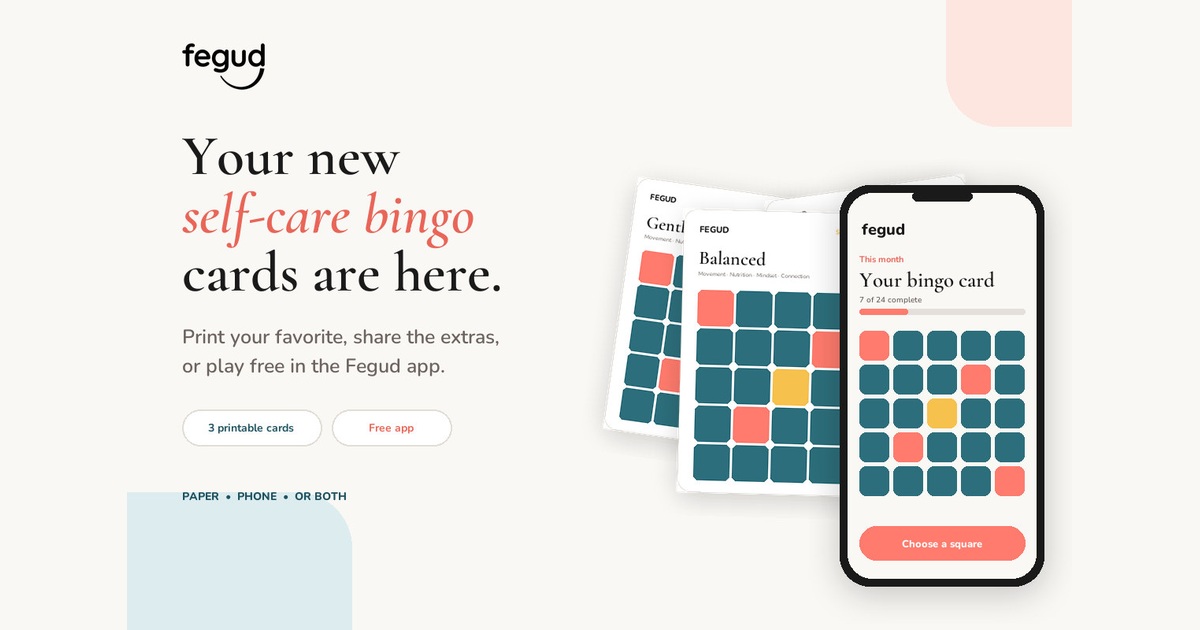
A bingo row can give your self-care reset day a menu without dictating the order.
Build a reset row from a bingo card
A five-square row can hold choices without deciding the order. Try this structure:
- One comfortable Movement activity
- One easy Nutrition activity
- One low-pressure Connection activity
- One enjoyable Mindset activity
- One free square that means stop, swap, rest, or repeat a favorite
Choose the actual activities from your card. If a square does not fit your body, schedule, home, budget, culture, safety, or preference, replace it. Completing a row is optional. The card should make choosing lighter, not turn care into a contest.
The questions below help you shape a self-care reset day around your time, access, and preferences.
Your self-care reset day can change as your energy, obligations, or surroundings change.
Frequently Asked Questions
What is a self-care reset day?
It is a day or part of a day set aside for one or more chosen activities outside your usual pace. It may include rest, food, movement, connection, quiet, play, or practical care. It does not require a makeover, cleaning marathon, or strict routine.
What should I do on a self-care reset day?
Meet one immediate need, then choose one activity that fits your time and capacity. Eat something, rest, move comfortably, enjoy familiar entertainment, contact someone, make something, or spend time alone. Stop there if one activity is enough.
Can a reset day be only one hour?
Yes. Use the hour for one immediate need and one welcome activity. You do not need to compress a full-day checklist into 60 minutes or prepare for the entire week.
Does a reset day have to include cleaning or planning?
No. Cleaning or planning can be included when you genuinely want the result, but neither is required. Rest, food, play, company, solitude, and leaving things unfinished are valid choices too.
How do I avoid turning self-care into another checklist?
Set a maximum instead of a minimum. Choose one activity first, no more than four for a longer day, and decide in advance that stopping is allowed. Treat every extra activity as an option, not overdue work.
What if I stop before finishing the plan?
Then the plan is finished for now. You can return later, replace an activity, or leave it undone. A reset is not measured by how many boxes you check.
How can I make a reset-day bingo row?
Pick one square for Movement, Nutrition, Connection, and Mindset, then add a free square for rest, swapping, or repeating a favorite. Complete them in any order, or keep the row as a menu rather than a goal.